
 Read on Twitter
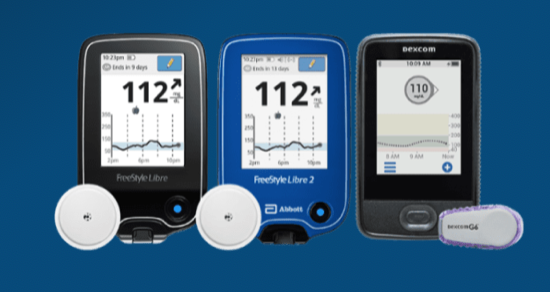
1/8 Continuous Glucose Monitors (CGM) and *type 2* diabetes - can they help?
A short thread...
Over the last 2 years I've found a 2-4 week opportunity for my patients to learn how their body reacts to different foods can be invaluable
But @NICEComms don't recommend in T2DM
A short thread...
Over the last 2 years I've found a 2-4 week opportunity for my patients to learn how their body reacts to different foods can be invaluable
But @NICEComms don't recommend in T2DM
2/8 CGMs have revolutionised monitoring of type 1 diabetes. Currently recommended by @NICEComms only for some *not all* with type 1 eg:
Frequent asymptomatic hypos >2x/week
Severe hypos >1x/yr
Loss of awareness of hypos
Very poor control
See https://www.nice.org.uk/guidance/ng17/chapter/Recommendations#blood-glucose-management-2
Frequent asymptomatic hypos >2x/week
Severe hypos >1x/yr
Loss of awareness of hypos
Very poor control
See
https://www.nice.org.uk/guidance/ng17/chapter/Recommendations#blood-glucose-management-2
3/8 My practice has now helped 92 people reverse their type 2 diabetes using dietary change; cutting out sugar + starchy carbs
It's not rocket science, see my previous thread on how it can be done https://twitter.com/DocRunner1/status/1202983490859470849?s=20
Here's our published research
https://nutrition.bmj.com/content/early/2020/11/02/bmjnph-2020-000072
It's not rocket
science, see my previous thread on how it can be done https://twitter.com/DocRunner1/status/1202983490859470849?s=20Here's our published research
https://nutrition.bmj.com/content/early/2020/11/02/bmjnph-2020-000072
4/8 The key to reversing type 2 diabetes is understanding which foods to avoid: which foods your sugar + those that don't
This is almost impossible to know without real time feedback on the impact of different foods on sugar levels
(Technically CGMs read interstitial glucose)
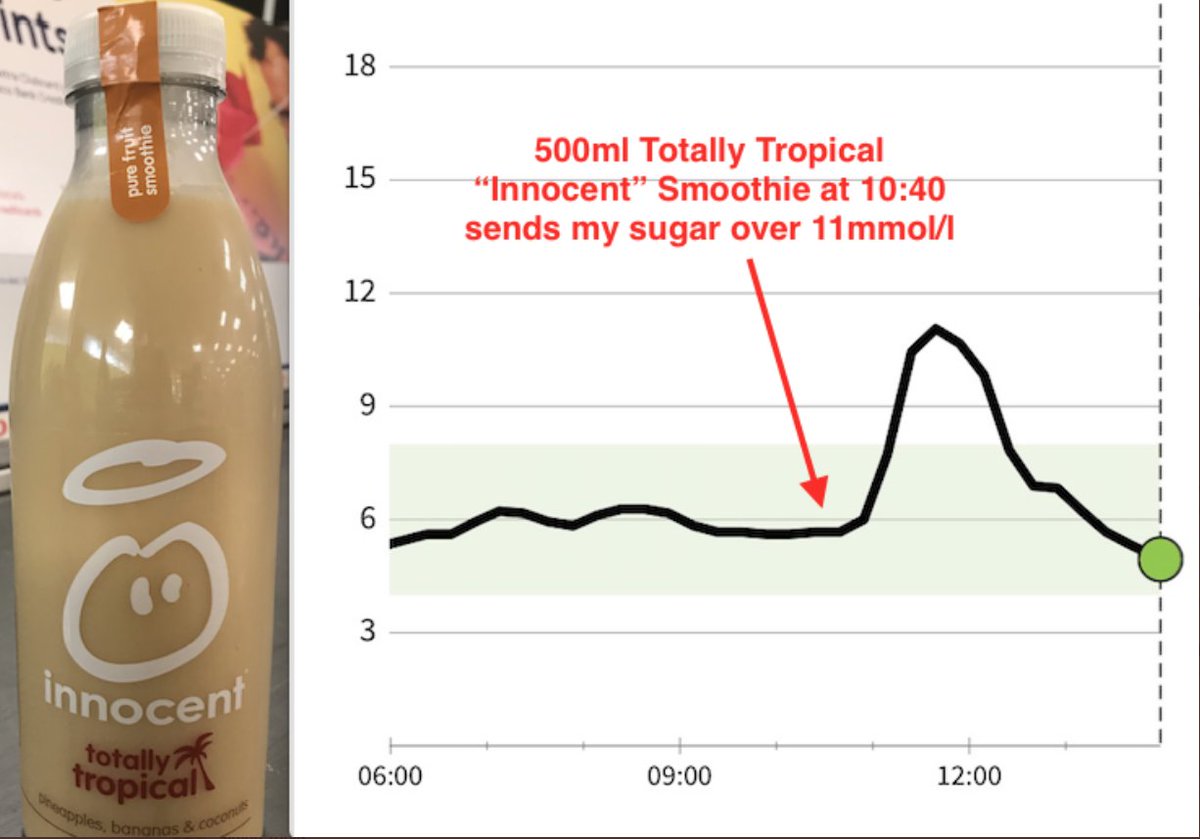
your sugar + those that don'tThis is almost impossible to know without real time feedback on the impact of different foods on sugar levels
(Technically CGMs read interstitial glucose)
5/8 The fab work of @segal_eran shows that generally sugars + starchy carbs (cereals, rice, bread, potatoes and pasta)blood sugar but individuals vary greatly in their degree of response to foods
*You need to know what works/doesn't work for you*
See https://twitter.com/DocRunner1/status/1277997266117234689?s=20
blood sugar but individuals vary greatly in their degree of response to foods*You need to know what works/doesn't work for you*
See
https://twitter.com/DocRunner1/status/1277997266117234689?s=20
6/8 I've found by lending CGMs to my patients with type 2 diabetes:
2-4 weeks alone gives enough info to revolutionise their understanding of how their diet impacts blood sugar
They can then decide their goals BUT NOW they have the knowledge, tools + motivation to achieve them
2-4 weeks alone gives enough info to revolutionise their understanding of how their diet impacts blood sugar
They can then decide their goals BUT NOW they have the knowledge, tools + motivation to achieve them
7/8 The cost of 1 or 2 CGM sensors (say £30-60) pales into insignificance when compared to the cost of medication for diabetes
My practice saves >£50k/year on diabetes drugs by supporting dietary/lifestyle change rather than jumping in with medication
https://nutrition.bmj.com/content/bmjnph/early/2020/11/02/bmjnph-2020-000072/F5.large.jpg
My practice saves >£50k/year on diabetes drugs by supporting dietary/lifestyle change rather than jumping in with medication
https://nutrition.bmj.com/content/bmjnph/early/2020/11/02/bmjnph-2020-000072/F5.large.jpg
8/8 So I'm interested in the thoughts of others about whether short term loan (2-4 weeks) of a CGM could help people with type 2 diabetes reverse or improve their condition
@Diabetescouk
ps No conflicts of interest to declare
I've never received £ from a pharmaceutical company
@Diabetescouk
ps No conflicts of interest to declare
I've never received £ from a pharmaceutical company


