
 Read on Twitter
 Welcome to #SLUSOMPath2021! Today we discussed how we will be using Twitter as a resource to review #BasicPathology lecture material, extend learning beyond the classroom, & participate in #MedEd. Let’s get started & review some of the key points. Follow the #Tweetorial below

 What is the study of pathology?
 You got it. Pathology is the study (logos) of suffering/disease (pathos). It is a discipline that has foundations in both basic science & clinical practice, who purpose is to study changes (structural and functional) that underlie diseases. What will this course focus on?
 You’re right, this course will cover all of the above: mechanisms of cell injury, inflammatory process, thrombosis and ischemia, neoplasia, environmental impact, clinicopathologic correlation & the pathologist’s role in patient care. What is a #Tweetorial?
A #tweetorial, also known as a #MedThread, is a collection of threaded tweets used as an educational tool & offers multilayers of media to support different learning styles & personalized education. Learn more & read @NEJM article written by @tony_breu https://www.nejm.org/doi/full/10.1056/NEJMp1906790#.XjeXZq-Qylc.twitter

https://www.nejm.org/doi/full/10.1056/NEJMp1906790#.XjeXZq-Qylc.twitter
#MedEd is thriving @slusom. Your clinical rotations are right around the corner, & you will begin to piece all of these islands of information into practice. Make sure to follow the #MedEd Leaders @SLUHospital that will bridge these medical concepts at the patient bedside.
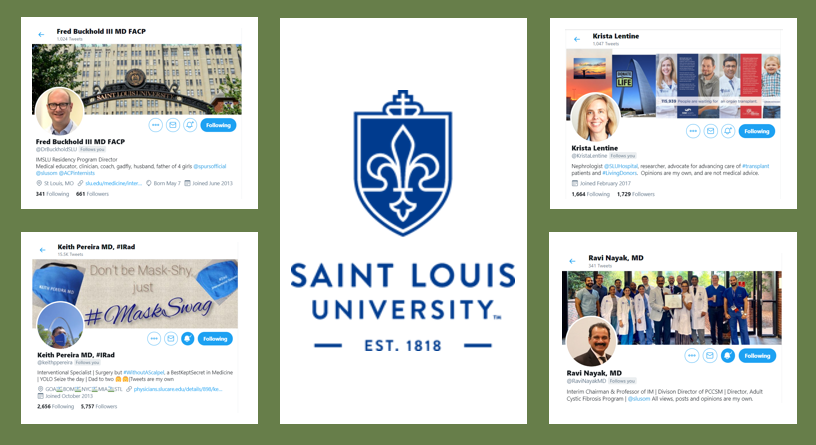
 Developing healthy guidelines on Twitter professionalism is imperative. I’ve added a number of great resources on Canvas, but I highly recommend by starting your professional #MedEd experience by reading this great thread by @sarah_Mojarad https://twitter.com/Sarah_Mojarad/status/1136891428582305792?s=20
Each #SLUSOMPath2021 Tweetorial will close with an #AdvancePath question that provides a way to expand your #MedEd knowledge. Here’s the first one:
 In your own words, how would you describe the role of the pathologist? Please answer below.
In your own words, how would you describe the role of the pathologist? Please answer below.


