
 Read on Twitter
So with a deal apparently imminent the overwhelming sentiment for agriculture ought to be RELIEF. For farming, the distinction between “deal” and “no deal” was perhaps more stark than any other sector because of the tariffs (many very high) that apply, both ways, on agri-food. 1/
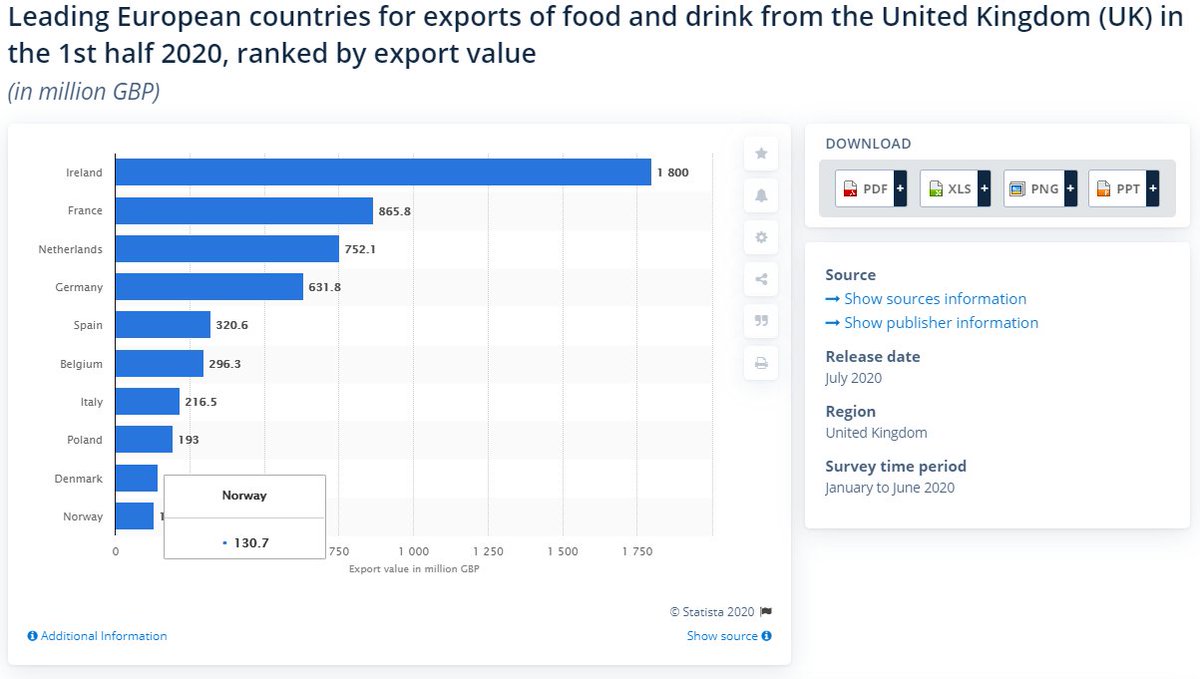
These will not apply with a deal. This is hugely important given the importance of EU/UK trade in agri-food goods - something we’ve been reminded of in recent days. 2/ https://www.bbc.co.uk/news/business-55408788
PS - and while we're concerned about domestic food supply, its not just food coming in. 3/
So, a deal is very good news, and to be welcomed. Now for the inevitable, BUT…
There remain many, many challenges for UK farming in the weeks, months and years ahead from Brexit. 4/
There remain many, many challenges for UK farming in the weeks, months and years ahead from Brexit. 4/
Firstly, the short term disruption coming from Jan 1st from leaving the customs union and single market. Even with a deal, big changes in the way businesses trade are coming. The extent of that can be seen on the excellent EU exit agri-food hub. 5/ https://euexitfoodhub.co.uk/
Once upon a time the objective was free & frictionless trade with the EU and exactly the same benefits of the single market. Of course, this is very much NOT the case. There will be friction and additional barriers in trading with the EU in a way that does not currently exist. 6/
However, one of the other advantages of a deal, beyond tariff elimination, is the constructive basis it provides the EU and UK to co-operate in mitigating and easing the frictions that will arise. 7/
We will examine the details of the deal to see how much of this is written into the agreement, but even if it’s sparse, we hope both sides will seek to reduce the delays, checks, and red tape that will now be a fact of life in trading with the EU. 8/
Secondly, there are significant long-term challenges of what is, in truth, a pretty “hard” Brexit. This includes our trading relationships with countries outside the EU, our future immigration policy and our future agricultural support system. All of which are “up in the air”. 9/
Our future immigration policy will focus on attracting skilled, high-wage labour from overseas, while hoping the “lower-skilled" jobs in industries like farming (even if we know they are often highly skilled jobs) can be filled from the domestic workforce. 10/
We know the limitations of this approach, despite the great response from UK workers to the “pick for Britain” campaign over the summer. It means huge uncertainty for those businesses that have high labour requirement which until now has often been met by EU workers. 11/
On trade, DIT has done a good job in rolling over (most of) the terms existing trade deals including Japan and Canada to maintain existing trade with these markets. But we are now negotiating trade deals with BIG agricultural exporters - US, Australia and New Zealand. 12/
Those guys will look to drive hard bargains that work for them, and they will want to sell us more of their agricultural output. In contrast, the opportunities for more UK food exports could come from other markets we’ve yet to prioritise. 13/
So there's much to be done in working with government and industry to make sure the current talks don’t offer up British farming as a trade-off for other wins, and don’t open our doors to a flood of sub-standard food… 14/
…and to develop - quickly - an export strategy that focuses on those markets that provide genuine opportunities to sell more British food abroad, while recognising the EU will remain our most important export market, due to size and proximity. 15/
And on agricultural policy, recent experience from COVID-19 shows we must place a value on the domestic production of food - high welfare, environmentally sustainable, climate-friendly food, yes, but without ignoring that important word “production”. 16/
As from next year, current farm support payments will begin to be phased out in England (while continuing for our competitors in the EU, and indeed across most of the world). Will the new system be ready in time to support farmers in reaching its objectives? 17/
So, outcomes that allow UK farming to thrive across all these areas - labour, farm support, trade policy - are of course possible (and its Christmas, lets be "glass half full"!) But we know - because of the road we’ve travelled the last four years - they can’t be guaranteed. 18/
So, we will quickly look through the detail of the deal and assess what it means for farming, especially any "phasing in" arrangements (unlikely?), and the terms on level playing field and regulatory alignment/divergence.
Keep up to date here:
https://www.nfuonline.com/news/eu-exit/
19/
Keep up to date here:
https://www.nfuonline.com/news/eu-exit/
19/
And finally - as I said up top, its a huge relief that there appears to be a deal. But we have our work cut out over the years ahead. This is really just the end of the beginning...
The hard yards start here!
Happy Christmas!
/end
The hard yards start here!
Happy Christmas!
/end


