
 Read on Twitter
Today's Labour Force Survey:
• #CdnEcon added 419k jobs in July (mostly part-time), which brings employment now to 1.3 million jobs (or 7%) below pre-COVID levels
https://www150.statcan.gc.ca/n1/daily-quotidien/200807/dq200807a-eng.htm #CdnEcon
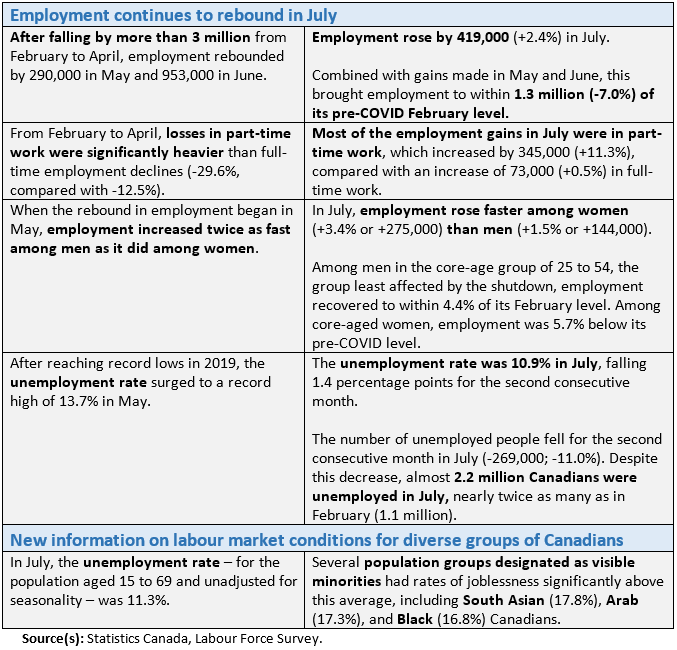
• #CdnEcon added 419k jobs in July (mostly part-time), which brings employment now to 1.3 million jobs (or 7%) below pre-COVID levels
https://www150.statcan.gc.ca/n1/daily-quotidien/200807/dq200807a-eng.htm #CdnEcon
• Of the ~5.5 million Canadian workers impacted by COVID disruptions in March and April, there are still ~2.3 million impacted (or 42%).
• Of these impacted workers, ~1.3 million jobs haven't been recovered yet and ~1 million jobs are still working far less hours than usual.
• Of these impacted workers, ~1.3 million jobs haven't been recovered yet and ~1 million jobs are still working far less hours than usual.
...Here's the #CdnEcon employment chart:
So far we've drawn 55% of the "V".
The key question going forward is whether this pace of recovery continues, or slows further in the fall with the return to school.
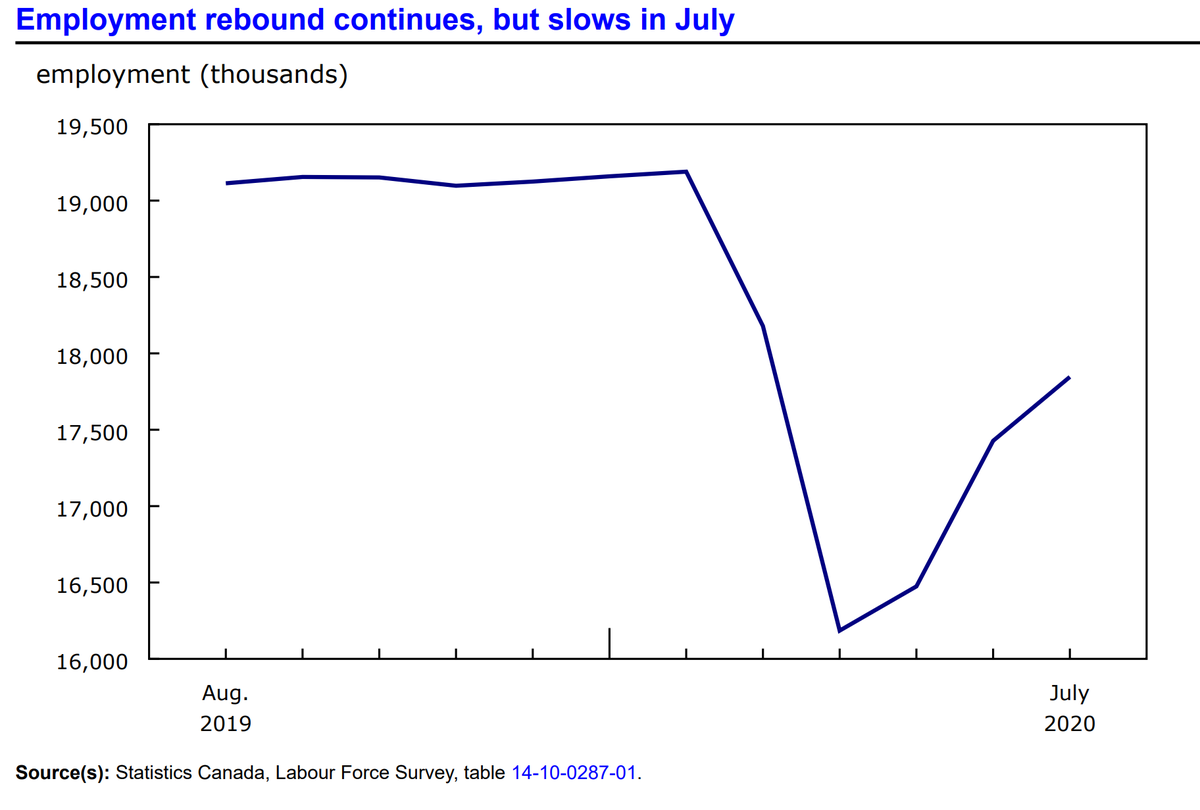
So far we've drawn 55% of the "V".
The key question going forward is whether this pace of recovery continues, or slows further in the fall with the return to school.
...Part-time work is now closer to its pre-COVID level (-5.0%) than full-time employment (-7.5%).
But there's been a noticeable increase in part-time workers who want full-time work (now 30% vs. 22% last July), which is consistent with fewer hours being offered by employers.
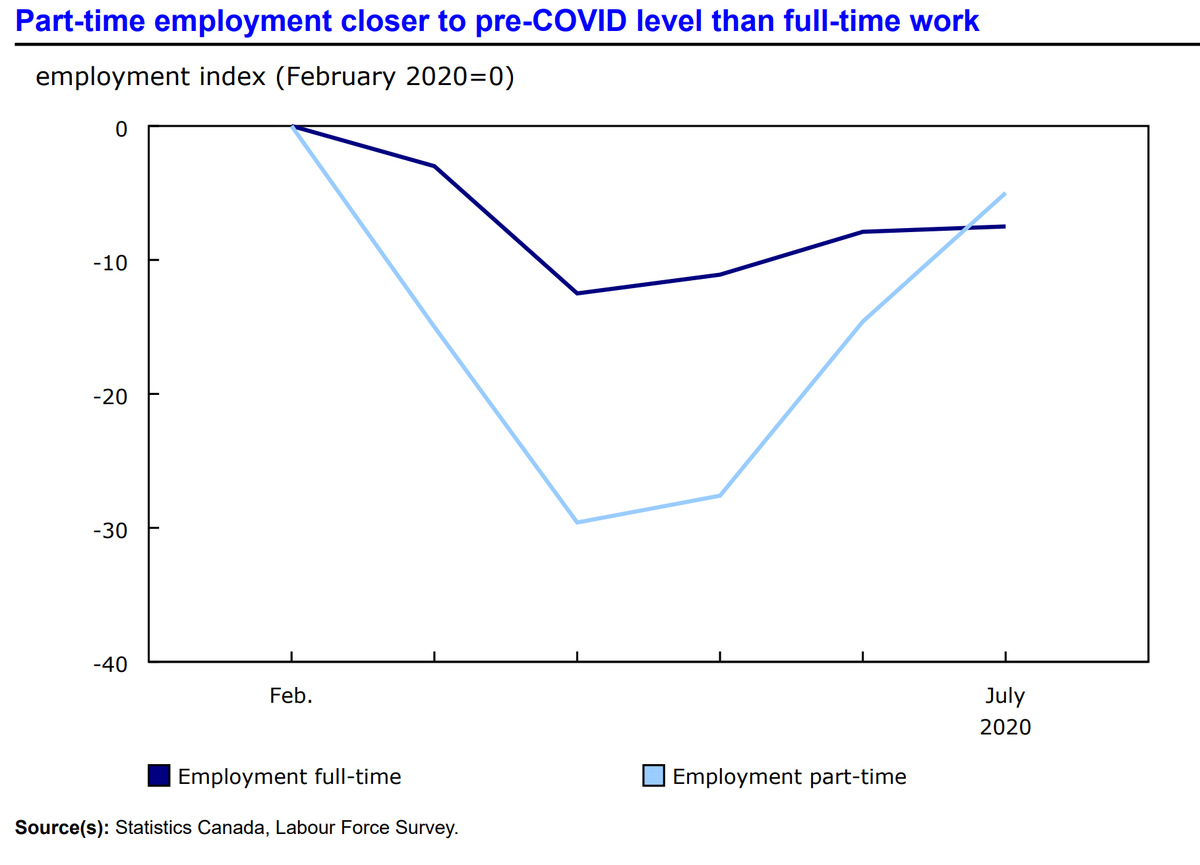
But there's been a noticeable increase in part-time workers who want full-time work (now 30% vs. 22% last July), which is consistent with fewer hours being offered by employers.
...Youth jobs have taken the biggest proportional hit.
On the #shecession #shecovery, women's employment has been hit harder.
Among the core-working-age population (25-54), women's employment remains farther below pre-COVID levels than men's (5.7% vs. 4.4%). #CdnEcon
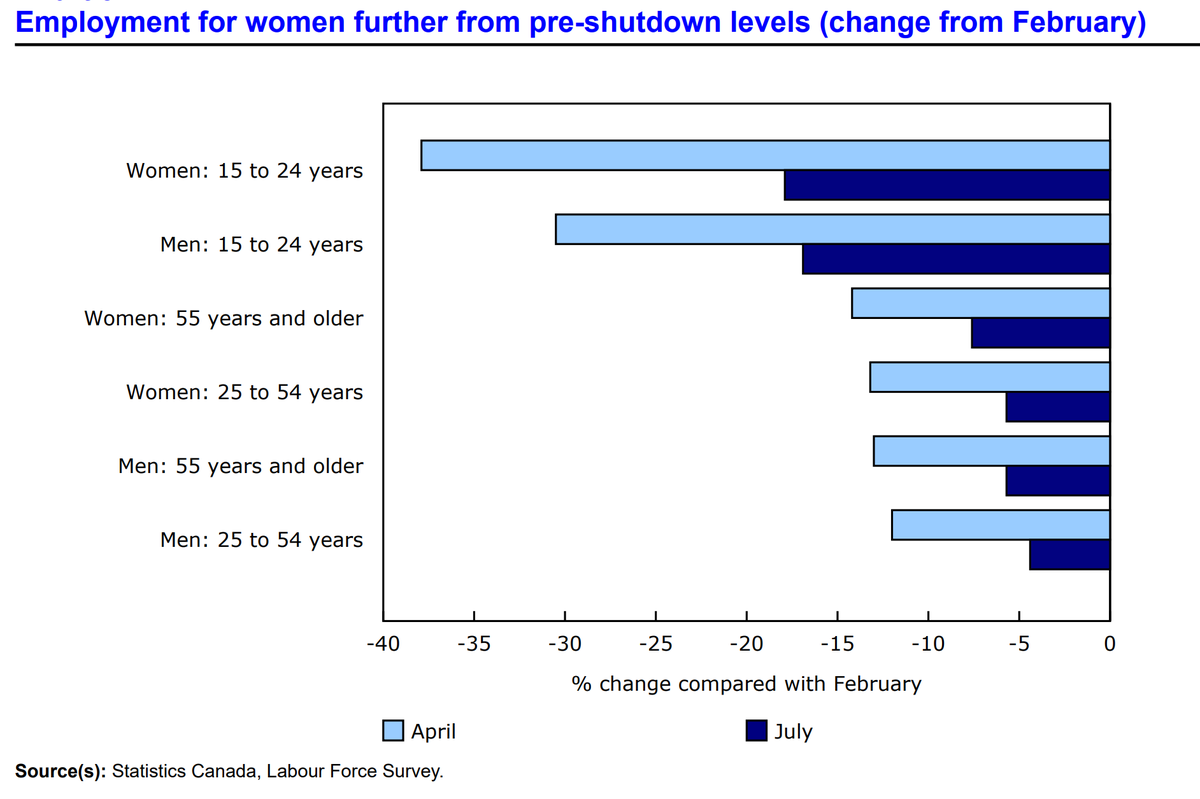
On the #shecession #shecovery, women's employment has been hit harder.
Among the core-working-age population (25-54), women's employment remains farther below pre-COVID levels than men's (5.7% vs. 4.4%). #CdnEcon
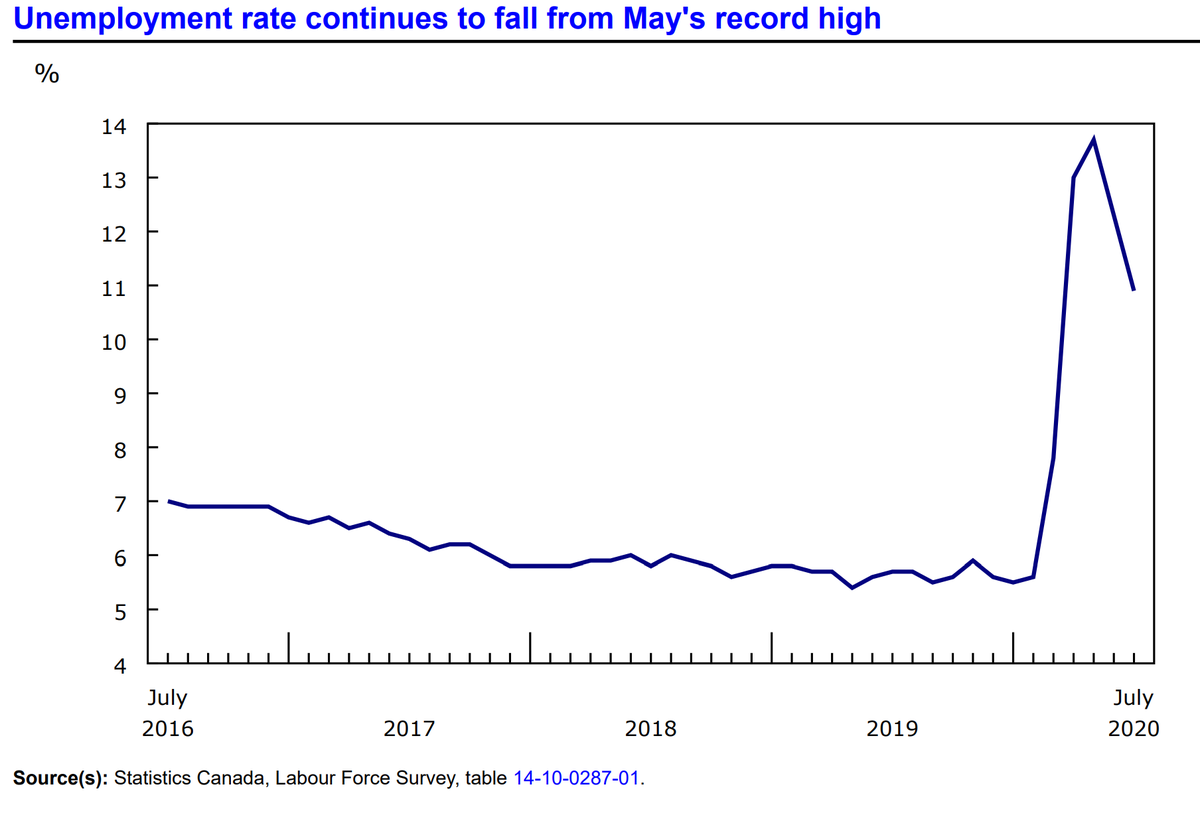
...Monthly reminder that the headline unemployment rate (now at 10.9%, down from its peak of 13.7%) isn't a terribly useful statistic right now.
The "labour underutilization rate" is a much better stat, which is still double its pre-COVID level:
Feb: 11.2%
Apr: 36.1%
Jul: 22.4%
The "labour underutilization rate" is a much better stat, which is still double its pre-COVID level:
Feb: 11.2%
Apr: 36.1%
Jul: 22.4%
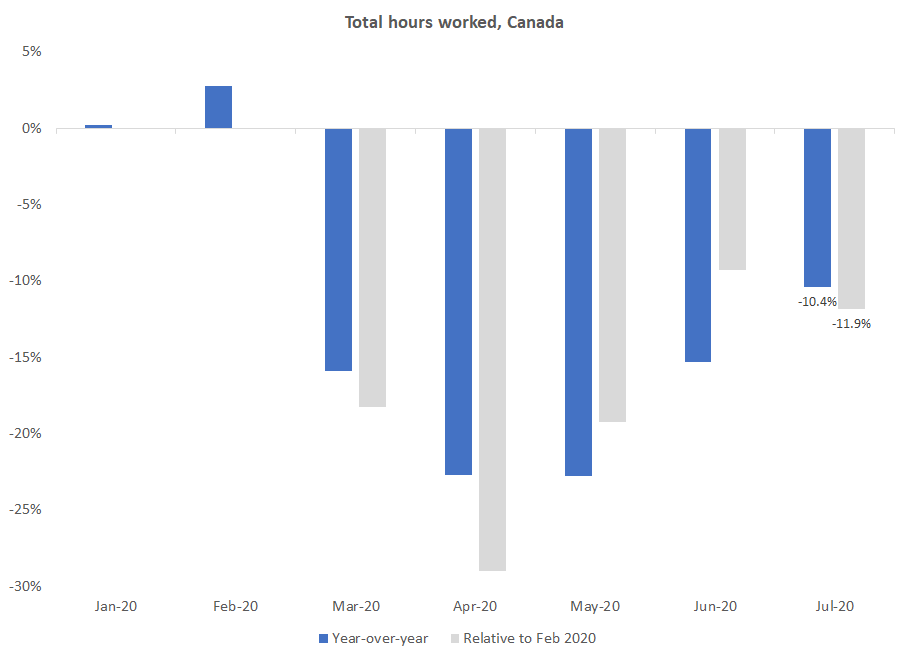
...Hours worked is another useful indicator of labour market health.
Whether you look at year-over-year changes (to address seasonality) or changes relative to February, this measure is down by ~10-12%, and remains farther away from a full recovery than employment (-7%).
Whether you look at year-over-year changes (to address seasonality) or changes relative to February, this measure is down by ~10-12%, and remains farther away from a full recovery than employment (-7%).
...One of the few positive developments from COVID has been better, timlier economic data.
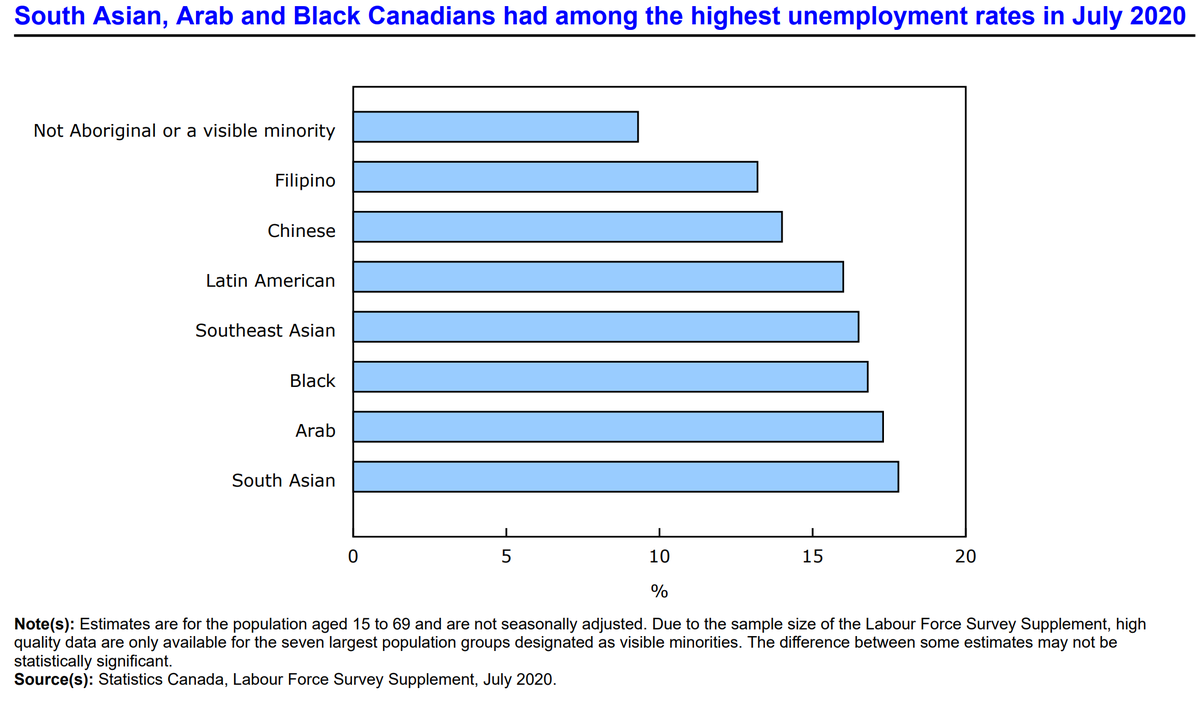
Now for the first time @StatCan_eng is releasing LFS data on visible minorities, which shows they have significantly higher unemployment rates than other Canadians. #CdnEcon
Now for the first time @StatCan_eng is releasing LFS data on visible minorities, which shows they have significantly higher unemployment rates than other Canadians. #CdnEcon
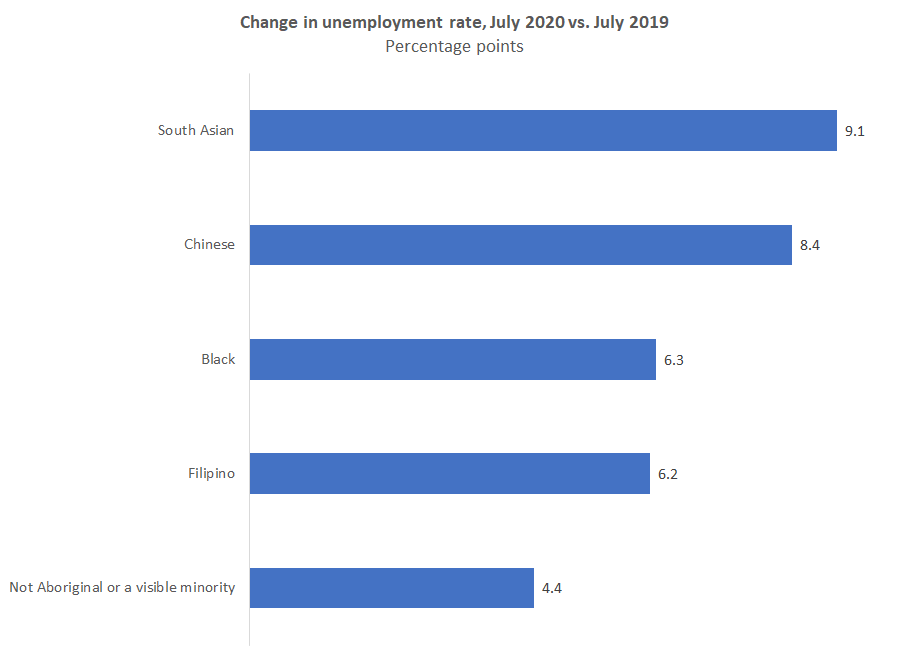
...StatsCan's new experimental estimates strongly suggest that the COVID crisis hit the labour market much harder for visible minorities in Canada. #CdnEcon
...Provincial data show the job recovery is lagging in Ontario and Alberta.
New Brunswick continues to lead the way. #CdnEcon
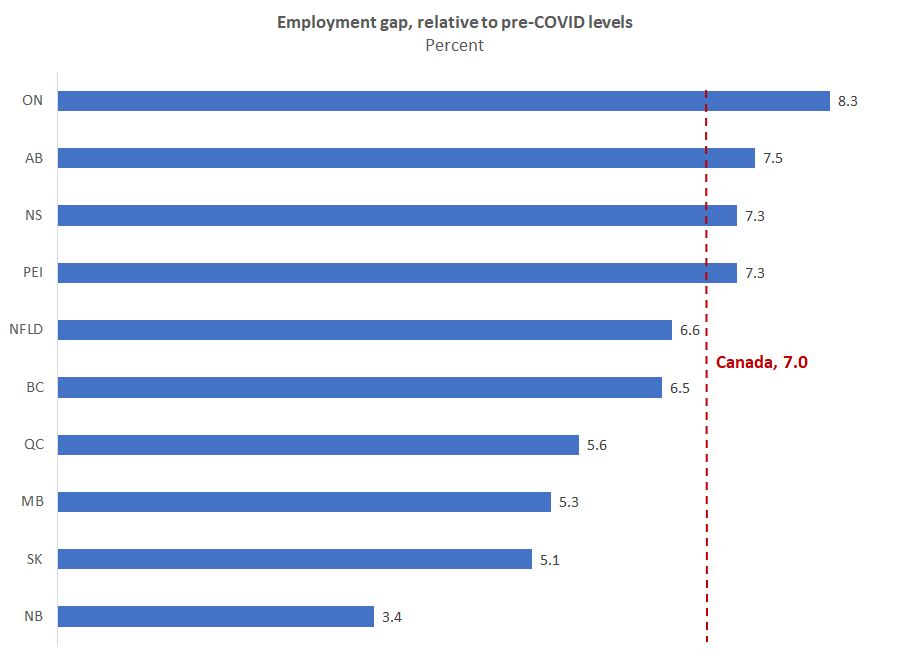
New Brunswick continues to lead the way. #CdnEcon
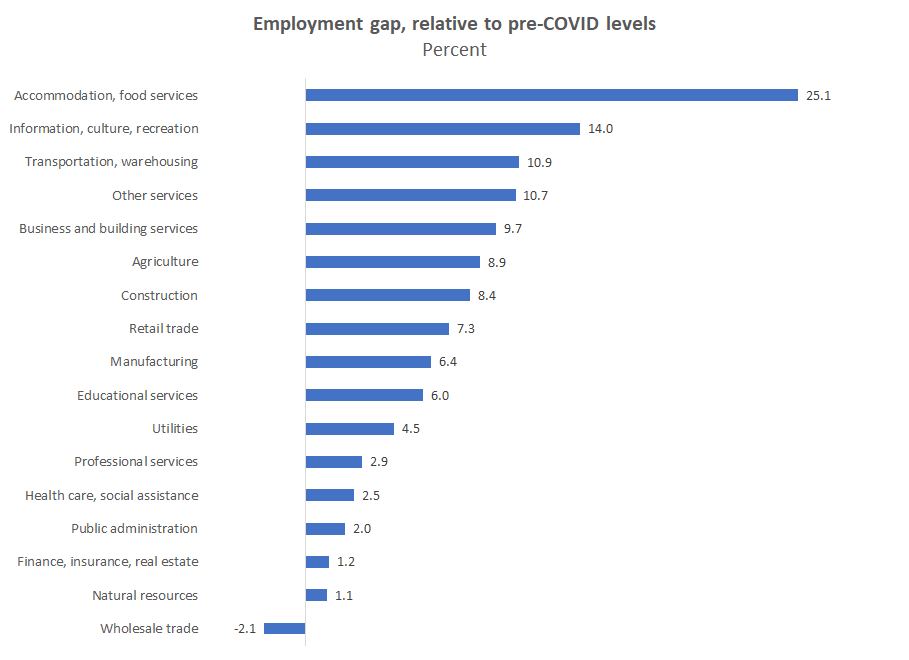
...Looking at sectoral employment, the gap between goods and services is gone.
The hardest hit sectors continue to be:
• Accommodation and food service
• Info, culture, recreation
• Transportation and warehousing
• Other personal services
#CdnEcon
The hardest hit sectors continue to be:
• Accommodation and food service
• Info, culture, recreation
• Transportation and warehousing
• Other personal services
#CdnEcon
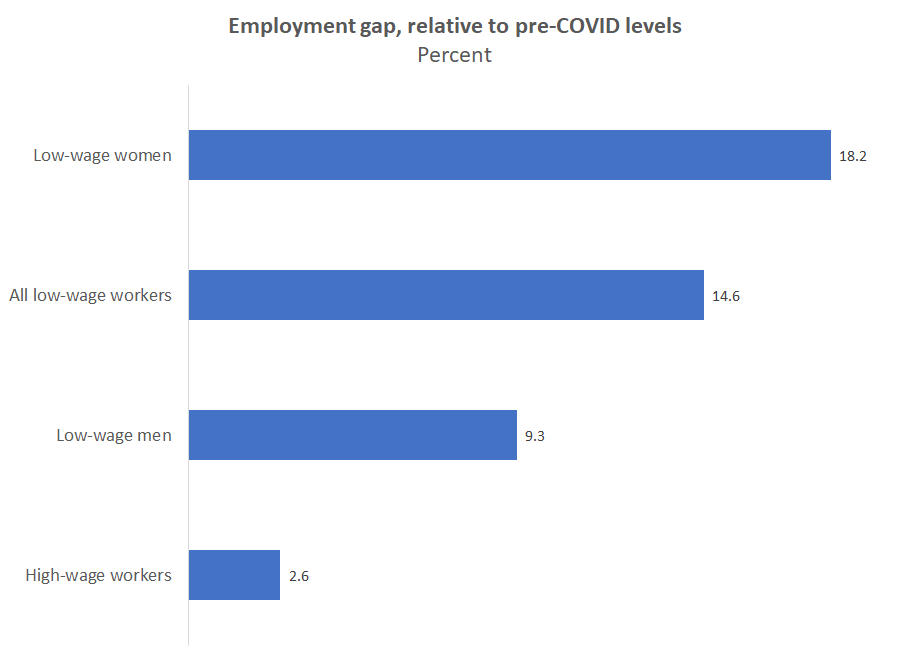
...The labour market disruption from the COVID crisis continues to fall disproportionately on low-wage workers in Canada, especially women.
("Low-wage" is defined as earning $16/hr or less.)
High-wage workers' jobs have, for the most part, been quite resilient. #CdnEcon
("Low-wage" is defined as earning $16/hr or less.)
High-wage workers' jobs have, for the most part, been quite resilient. #CdnEcon
...The share of Canadian households reporting difficulties meeting basic financial needs (e.g., paying rent/mortgage, utilities, groceries) was little changed in July at 19.6%.
This rate not rising recently, suggests fiscal programs have largely replaced lost incomes thus far!
This rate not rising recently, suggests fiscal programs have largely replaced lost incomes thus far!


